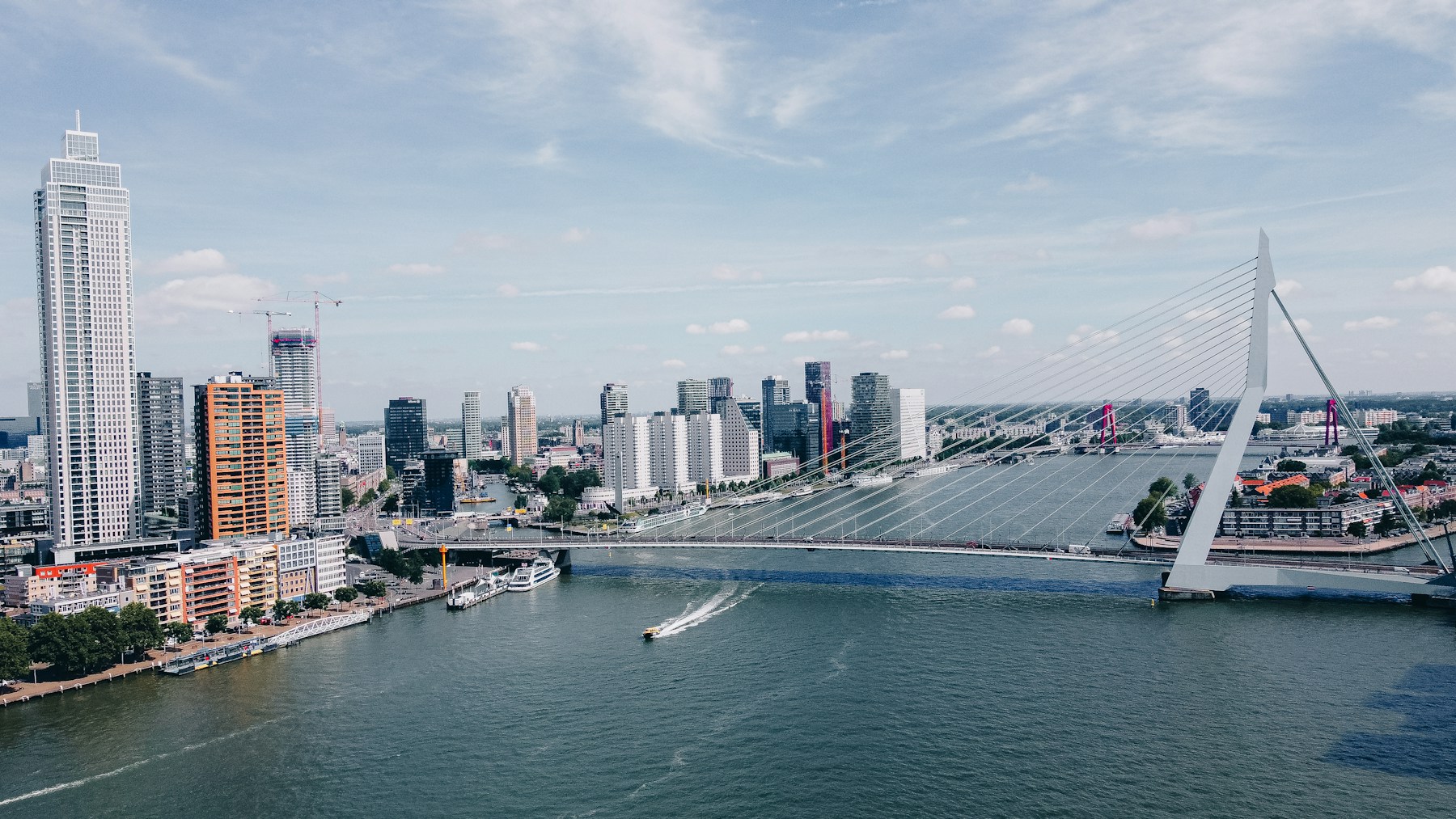
AI Agency in Rotterdam
Rotterdam AI agency guide for companies and AI users
Rotterdam is a practical city for AI adoption because business demand, digital talent, multilingual operations, and international commerce meet in one operating environment. Companies based in the city often need AI for concrete reasons: faster customer response, less manual administration, clearer sales follow-up, better data retrieval, sharper reporting, and more reliable handoffs between teams.
Go Expandia serves Rotterdam as a remote-capable AI agency. This page is about service coverage, not a public office location. We work with companies that want AI automation, AI consulting, AI agent development, and custom AI solutions without turning the project into a large internal research program.
This guide gives Rotterdam teams clear service-area facts: what Go Expandia provides, who the work is for, how remote delivery works, and how to evaluate a practical AI partner.
Quick service facts
Go Expandia provides AI agency services for businesses in Rotterdam, Netherlands, and nearby Dutch and European markets. The service categories are AI automation agency, AI consulting services, AI agent development, custom AI solutions, AI opportunity review, AI plan, AI build and setup, AI training, and AI support.
The page is not claiming a walk-in office in Rotterdam. It is a service area page for companies that can work through remote discovery, secure document exchange, video workshops, shared project systems, and structured implementation calls.
The city context matters. Rotterdam companies frequently operate in Dutch and English, with frequent support for German, French, Spanish, and other international customer languages. AI workflows in Rotterdam should be built with language control, tone control, privacy boundaries, review steps, and clear escalation paths.
Why Rotterdam is a strong AI service market
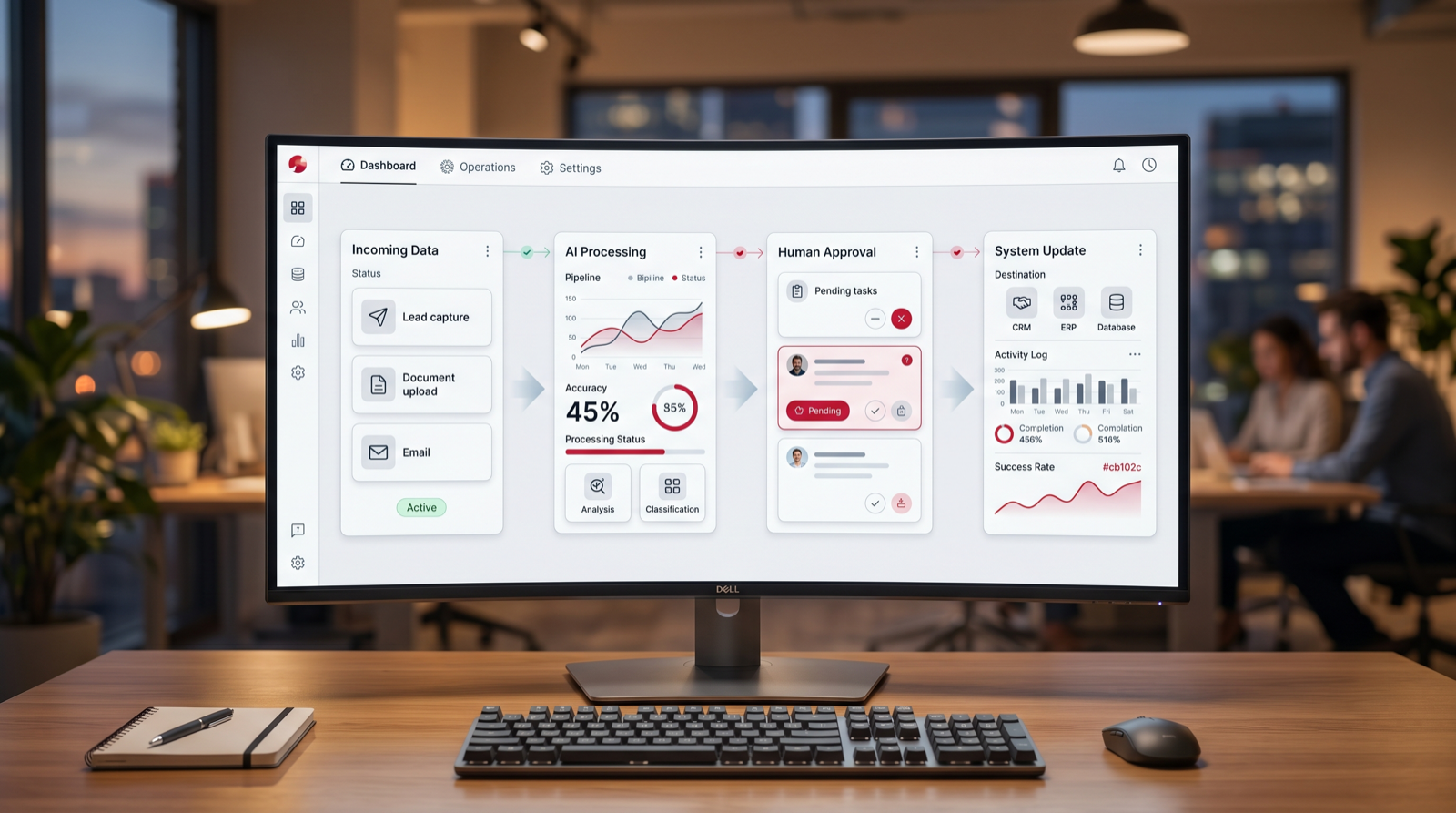
Rotterdam companies usually do not need another generic AI demo. They need a dependable way to turn client documents, support tickets, CRM notes, inboxes, spreadsheets, and internal knowledge into workflows that move faster without losing review control.
The local economy includes port operations, logistics, shipping, energy, maritime services, architecture, trade, ecommerce, manufacturing, professional services, and technology teams. These sectors create a practical need for AI systems that connect front office and back office work. A logistics team may need shipment exception summaries. A maritime services team may need supplier document extraction. A trading or ecommerce team may need multilingual customer service and reporting automation.
For most businesses, the immediate opportunity is not to train a frontier model. It is to connect reliable AI components to the existing work of the company. That may mean a retrieval system over internal documents, an agent that drafts answers from approved knowledge, a workflow that prepares reports from spreadsheets, or an automation that routes requests from email to CRM to Slack or Microsoft Teams.

What AI users in Rotterdam usually need first
The first need is clarity. Many teams have tested ChatGPT or another AI tool informally, but they have not converted those tests into a dependable business workflow. The work starts by turning scattered interest into a use case list, then ranking each use case by value, risk, data readiness, user adoption, and integration complexity.
The second need is data hygiene. Useful knowledge may sit across Google Drive, Microsoft SharePoint, Notion, Dropbox, CRM notes, email threads, spreadsheets, PDFs, support tools, and supplier portals. AI cannot safely improve work if it cannot distinguish the current source of truth from old drafts, duplicates, informal notes, or private records.
The third need is integration. AI becomes valuable when it meets users where work already happens: drafting a CRM follow-up after a call, summarizing a support ticket before a handoff, preparing a proposal from a product catalog, extracting invoice details into an approval sheet, or creating a daily operations summary from several tools.
High-value AI use cases for Rotterdam companies
Customer support and multilingual service
Customer support is a natural starting point. A support AI can search approved help content, draft replies in the customer's language, summarize prior history, flag refund or legal issues, and route complex cases to a person. The system should use known material, show confidence, and make handoff easy.
Sales operations and lead routing
AI can classify inbound leads, enrich account notes, draft first replies, prepare discovery call briefs, write follow-up emails, and remind the team when a qualified opportunity goes quiet. This can reduce the delay between interest and response while keeping the sales team aligned around the same context.
Documents, reporting, and knowledge retrieval
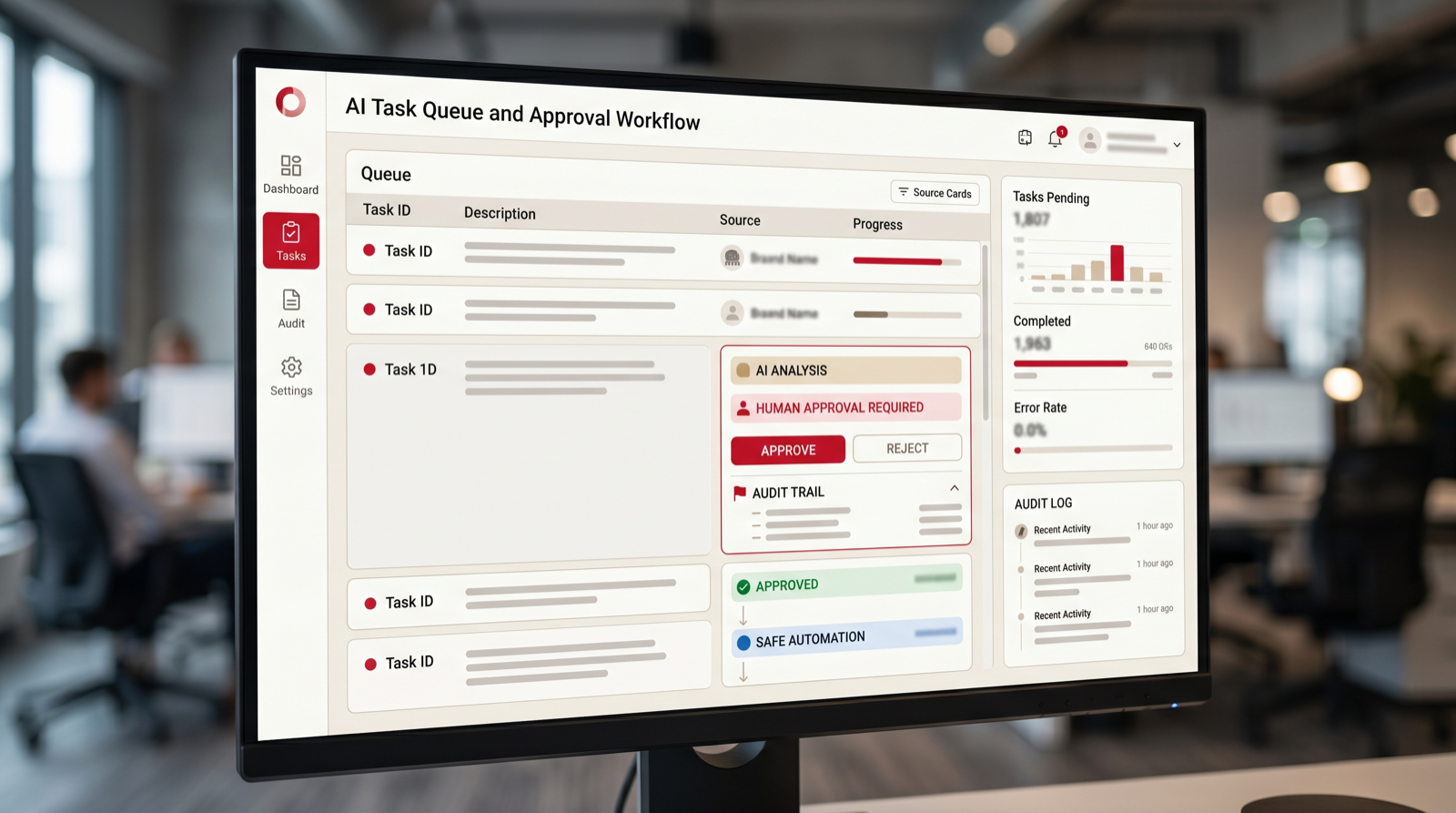
Companies dealing with supplier documents, purchase orders, client files, product data, support tickets, and management reports can use AI for extraction, summaries, anomaly detection, and knowledge search. These workflows should be built with audit trails, confidence thresholds, and human approval where needed.
Professional services firms can use AI for knowledge retrieval, client intake, research summaries, proposal generation, meeting preparation, and internal quality checks. The AI should support the expert; it should not pretend to replace professional responsibility.
How Go Expandia works with Rotterdam teams
The five-step delivery model
The first version should be narrow enough to launch, but not so narrow that it cannot be used in daily work. A practical Rotterdam AI project should use real samples, real users, and a measurable operating result.
Data privacy, security, and governance
AI adoption in Rotterdam must respect client confidentiality, internal access rules, and applicable privacy expectations. A practical AI workflow should begin with data classification: what is public, what is internal, what is confidential, what contains personal information, and what should never be sent to an external model.
Governance should be built into the workflow rather than added later. For a support agent, governance may mean approved knowledge sources, answer confidence, refusal rules, logging, and human handoff. For a document extraction system, it may mean confidence thresholds, exception queues, and reviewer approval.
Remote AI delivery for Rotterdam teams
Go Expandia serves Rotterdam businesses through remote discovery, planning, implementation calls, secure document exchange, and ongoing support. The core services are AI automation, AI consulting, AI agent development, custom AI solutions, AI opportunity review, AI planning, build and setup, training, and support.
This is a service area page rather than a walk-in office listing. Remote delivery works well for software workflows, knowledge retrieval, automations, reporting systems, and internal tools when scope, data access, review responsibilities, and success metrics are clear.
How to choose an AI agency in Rotterdam
A Rotterdam business should choose an AI partner by looking at the quality of the questions the partner asks. Weak vendors start with tools. Strong vendors start with workflow, risk, data, users, and outcomes.
Ask whether the partner can explain the difference between a demo and a production workflow. A demo can look good with sample data and a friendly prompt. A production workflow has messy inputs, user mistakes, edge cases, changing policies, permissions, rate limits, integrations, and support expectations.
Ask for a small first project with a real business metric. Good starting metrics include response time, minutes saved per ticket, percentage of leads routed correctly, number of documents processed per week, manual follow-up reduction, proposal turnaround time, support backlog reduction, or reporting hours saved.
Recommended first project roadmap
Week one should be discovery and selection. The team lists candidate use cases, maps the current workflow, reviews sample data, names the users, identifies risks, and chooses one first project.
Week two should define the workflow: trigger, input, AI task, data source, review step, output, integration, and metric. This is much clearer than saying "build a support AI" or "add an agent."
Weeks three and four should focus on build, test, and revision. The system should be tested with real examples, including difficult cases, incomplete inputs, multilingual content where relevant, and edge cases that require handoff.
After launch, the team should review performance weekly at first. Which prompts fail? Which cases are escalated? Which source documents are missing? Which outputs need editing? These findings are normal product input.

Rotterdam sector notes
For port, logistics, shipping, and maritime teams, AI can support document extraction, shipment summaries, supplier communication, exception routing, and recurring operational reports.
For energy, manufacturing, and trade teams, AI can help with technical document retrieval, supplier updates, compliance-aware summaries, and internal handoffs.
For ecommerce, professional services, and technology teams, AI can support support drafting, account briefs, CRM cleanup, reporting, and internal knowledge search.
Rotterdam buyer context for AI agency work
Rotterdam companies often evaluate AI through logistics speed, maritime coordination, supplier document control, and international customer support. In practice, a port operator may need exception summaries, a shipping team may need document extraction, and a trade business may need faster multilingual customer replies. These are not abstract technology questions. They are workflow questions about where time is lost, which information is trusted, and who approves the final output.
A strong Rotterdam AI agency engagement should begin with the operating environment. Which tools already run the company? Where do users lose time? Which documents are trusted? Which teams approve sensitive outputs? Which parts of the workflow are contractual, regulated, reputationally sensitive, or customer-facing? The answers shape whether the first build should be a retrieval assistant, a workflow automation, a controlled AI agent, a document processing tool, a sales operations system, or a reporting pipeline.
The local context matters because Dutch and English often sit beside other European customer languages, so routing, tone, and source clarity matter from the start. A generic automation demo will not solve that. A useful workflow should handle the actual language, data, source material, review steps, and operational rhythm of the team using it.
What Rotterdam decision makers should prepare
Before speaking with an AI agency, a Rotterdam team should collect five concrete inputs: a short description of the workflow, five to ten real examples, the systems involved, the people who approve the output, and the metric that would prove the project worked. This preparation is more valuable than a long strategy deck. It lets the agency judge the real data, spot edge cases, estimate integration effort, and recommend a first version that can launch without months of internal debate.
Practical Rotterdam AI project examples
Port and logistics exception handling
Rotterdam logistics teams can use AI to summarize shipment updates, compare documents, identify missing fields, and prepare coordinator action lists. The workflow should route uncertain or high-risk exceptions to people.
Maritime supplier document processing
Maritime and energy teams can use AI to extract information from supplier documents, summarize technical notes, and flag compliance or delivery issues. The system should preserve source references for review.
Trade and ecommerce service support
Trade and ecommerce teams can use AI to draft replies, summarize order history, classify requests, and prepare reporting notes. The workflow should connect CRM, support, and logistics sources rather than create another isolated inbox.
Implementation playbook for Rotterdam teams
The first implementation phase should map the workflow in plain language. The team should name the trigger, input, AI task, knowledge source, review point, output, integration, and metric. This prevents a vague request such as "build us an AI tool" from becoming a costly open-ended project. A defined workflow might be: when a qualified lead arrives, summarize the company, classify the use case, draft a reply, create a CRM note, and ask a person to approve the next message.
The second phase should test real examples, including poor inputs. Rotterdam teams often have varied customer language, complex client relationships, and mixed document formats. The workflow should be tested with incomplete emails, messy spreadsheets, contradictory notes, outdated PDFs, and cases that require escalation. A system that only works with perfect examples is not ready for daily use.
The third phase is adoption. Users need to know when to trust the system, when to edit it, when to escalate, and where to leave feedback. Managers need a simple way to see usage, exceptions, quality issues, and time saved. A practical launch does not require every feature at once. It requires one workflow that the team can use repeatedly with confidence.
After launch, improvement should be structured. Review the failed cases, missing knowledge, confusing outputs, and unnecessary manual steps. Decide what should be fixed in prompts, what should be fixed in source data, what should be fixed in process design, and what should stay human. This is how a Rotterdam AI project moves from useful pilot to durable operating system.
How to measure AI agency quality in Rotterdam
The simplest quality test is whether the agency can explain the workflow back to the business in operational language. If the conversation stays at the level of models, prompts, and tools, the project is probably not grounded enough. A strong partner should be able to say what will change for the user on Monday morning, which task becomes faster, which risk is controlled, and what evidence will show that the project was worth doing.
Price-performance should be judged against useful output, not against day rates alone. A cheap project that produces an unused demo is expensive. A focused project that removes a recurring bottleneck, improves response speed, or saves senior staff time can be the better investment even if it requires more careful setup. The goal is not maximum technical novelty; it is a reliable workflow that earns its place in the business.
Rotterdam companies should also check support expectations. AI workflows need maintenance because documents change, policies change, users find edge cases, and integrations need care. Ask how improvements are handled after launch, how quality is monitored, what happens when the AI is uncertain, and how the system can be rolled back or limited if needed.
A final measure is honesty about limits. Some tasks are good candidates for automation, some are good candidates for AI-assisted drafting, and some should remain human decisions. A useful AI agency should be direct about that boundary. The best first project is the one that proves value without pretending that every judgment can be automated.
What not to automate first
Do not start with the most sensitive workflow in the company. If the business has never launched an AI system, avoid beginning with legal decisions, medical advice, financial approvals, hiring decisions, or any process where a wrong answer creates immediate harm.
Do not automate a broken process without fixing the process. If nobody agrees on the source of truth, AI will amplify confusion. A good project may include process cleanup before automation.
Frequently asked questions
Does Go Expandia have an office in Rotterdam?
This page is a Rotterdam service area page, not a public office listing. Go Expandia can support Rotterdam companies through remote discovery, planning, build sessions, implementation calls, secure file exchange, and ongoing support.
What AI services are available for Rotterdam businesses?
The main services are AI opportunity review, AI planning, AI automation, AI agent development, custom AI solution build and setup, AI training, and AI support.
What is the best first AI project for a Rotterdam company?
The best first project is usually a contained workflow with repeated work, available data, clear users, low-to-medium risk, and a measurable outcome. Examples include support reply drafting, lead routing, document extraction, proposal preparation, meeting summaries, internal knowledge search, or recurring report automation.
How should buyers read this service area page?
Use this as a practical overview of Go Expandia AI automation, consulting, agent development, custom AI solutions, training, and support for Rotterdam businesses. It describes remote-capable service coverage, not a physical office address.
Build the first useful AI workflow for your Rotterdam team.
Start with one real process, one measurable outcome, and a system your team can actually use. Go Expandia can help you review the opportunity, plan the workflow, build the first version, train the users, and support the system after launch.
Talk to Go Expandia