AI Automation Agency Near Me: 15 Things to Check Before You Choose a Local AI Partner
If you are searching for an AI automation agency near me, use this guide as a practical buyer checklist. It shows what to look for, what to avoid, and how to choose a partner that can turn real workflows into measurable AI automation.

Best-fit projects
Workflow automation, AI agents, internal copilots, CRM operations, reporting, document processing, customer support, and custom AI systems.
Focus
Local AI automation partner
Project start
Days to weeks
First pilot
2 to 6 weeks
Best outcome
Measured time saved
TL;DR
The best AI automation agency near you is not simply the one with the closest address. It is the partner that can understand your workflow, choose the right first use case, connect to the tools your team already uses, build AI agents with human guardrails, and prove value after launch. Use the 15 checks below to compare agencies, avoid generic AI demos, and choose a partner that can move from consulting to automation, agent development, custom AI solutions, training, and support.
Companies ask for an AI automation agency near me because they are tired of vague AI promises. They do not want a flashy chatbot demo that looks impressive for five minutes and then sits unused. They want a practical partner that can look at the actual work happening inside the business: lead follow-up, customer support, invoice review, document processing, reporting, scheduling, CRM updates, internal approvals, research, and all the small operational steps that consume time every day.
At the same time, "near me" should not be interpreted too narrowly. For AI automation, the better definition of local is practical access. You need timezone overlap, fast workshops, clear documentation, a team that understands your market, and a delivery model that lets your people give feedback without waiting a week for a reply. A modern AI agency can work remotely and still behave like a local partner when the operating model is structured correctly.
This guide keeps the context simple: you are evaluating an AI automation agency that can help your business reduce repetitive work, build controlled AI agents, connect data and software, and launch a useful first pilot. The checks below will help you separate serious implementation partners from agencies that only sell hype.
How to use this list before a sales call
Read the list once before you speak with any agency, then use it again during the call. You do not need to ask every question in the same order, but you should leave the conversation with clear answers. A good agency will welcome the structure because it helps both sides define the real scope. A weak agency will often move away from specifics and return to broad claims about AI transformation. That contrast is useful. It shows whether the team can handle operational detail, which is exactly what automation work requires.
AI Automation Agency vs Freelancer vs SaaS Tool
Before you choose a local AI partner, compare the delivery model. An AI automation agency is usually the best fit when the project needs discovery, workflow design, integrations, agent development, testing, training, and support in one place. A freelancer or independent consultant can be useful for a narrow build or advisory project. A SaaS automation tool can work when the process is already clean and the team only needs a product subscription. The wrong choice is usually expensive because the gaps appear after launch, when people need approvals, fixes, documentation, and ownership.
| Option | Best for | Strengths | Watch-outs | Choose it when |
|---|---|---|---|---|
| AI automation agency | Business workflows that need strategy, build, rollout, and support. | Combines consulting, integrations, AI agents, custom AI solutions, documentation, and training. | Needs clear scope and business owner involvement to avoid an oversized first project. | You want one accountable partner to turn a workflow into a working pilot. |
| Freelancer or consultant | Focused advice, audits, prompt work, or a contained technical task. | Can be flexible, fast, and efficient for a tightly defined need. | May not cover process design, security review, integrations, training, and long-term support. | You already know the exact problem and only need specialist execution. |
| SaaS automation tool | Simple repeatable tasks that match the tool's existing workflows. | Quick setup, predictable pricing, and useful templates for common automation patterns. | Limited when your data, approval paths, edge cases, or user adoption needs are custom. | The workflow is already documented and the team can manage setup internally. |
For most companies searching AI automation agency near me, the agency model makes sense when the work touches multiple systems or teams. You are not only buying AI. You are buying a practical path from messy business process to usable automation. That is why the next checks focus on workflow, local access, pilot scope, guardrails, data, ROI, and support instead of only asking which model or tool the vendor prefers.
Start with one workflow
Want to know what AI should automate first?
We can review your current process, identify the highest-value use case, and show you what a practical first pilot would look like.
1. Check Whether the Agency Starts With Workflow, Not AI Hype
A serious AI automation agency should begin by asking how work moves through your company. Before it talks about models, agents, prompts, or platforms, it should ask what starts the process, who receives the request, where the information lives, which decisions are rule-based, which decisions need judgment, and what happens when something goes wrong. That discovery step matters because most AI automation failures are not caused by the AI model itself. They are caused by unclear process ownership, poor data, vague success metrics, missing exception paths, or a tool that does not fit the way the team actually works.
If an agency hears "we want AI" and immediately recommends a chatbot, that is a warning sign. Your best first automation may be a lead routing system, a support triage flow, an invoice checking process, a reporting assistant, a CRM cleanup workflow, or an internal research agent. The right solution depends on the bottleneck. A good AI automation agency near you should be able to describe the workflow in plain business language before it writes a line of automation logic.
What this should sound like
The conversation should include specific questions: Which team owns the process? What does a good output look like? What examples can we review? What tools need to be connected? What data is sensitive? Which steps can be automated fully, and which steps should stay under human approval? If the agency cannot explain your workflow back to you clearly, it is not ready to automate it.
18 second marketing explainer
A short answer to what an AI automation agency does, how a first pilot starts, and when to book a call.
2. Define "Near Me" as Practical Access, Not Only Physical Distance
A nearby office can be useful, but it is not the whole definition of local fit. For AI automation, "near me" should mean the agency can work inside your practical business rhythm. It should share enough working hours with your team to run workshops, answer questions quickly, review test cases, and support launch issues. It should understand your market, your customer expectations, your language needs, and the compliance environment around your data.
For European businesses, local fit often includes GDPR awareness, data residency questions, multilingual workflows, and timezone overlap across teams in cities such as Zurich, Berlin, Amsterdam, London, or Istanbul. For US businesses, it may include regional sales coverage, industry-specific compliance, customer response speed, and CRM hygiene. For international companies, local fit often means the agency can build one automation standard while respecting the differences between each market.
When you compare agencies, ask how they run discovery if the team is remote. Ask whether they can hold live process mapping sessions, review your current tools, document decisions, and support users after launch. A remote agency can still operate like a local AI automation partner if it has a disciplined delivery model. A physically nearby agency can still fail if it works slowly, avoids documentation, or does not understand your operational reality.
3. Make Sure They Map the Process Before Choosing Tools
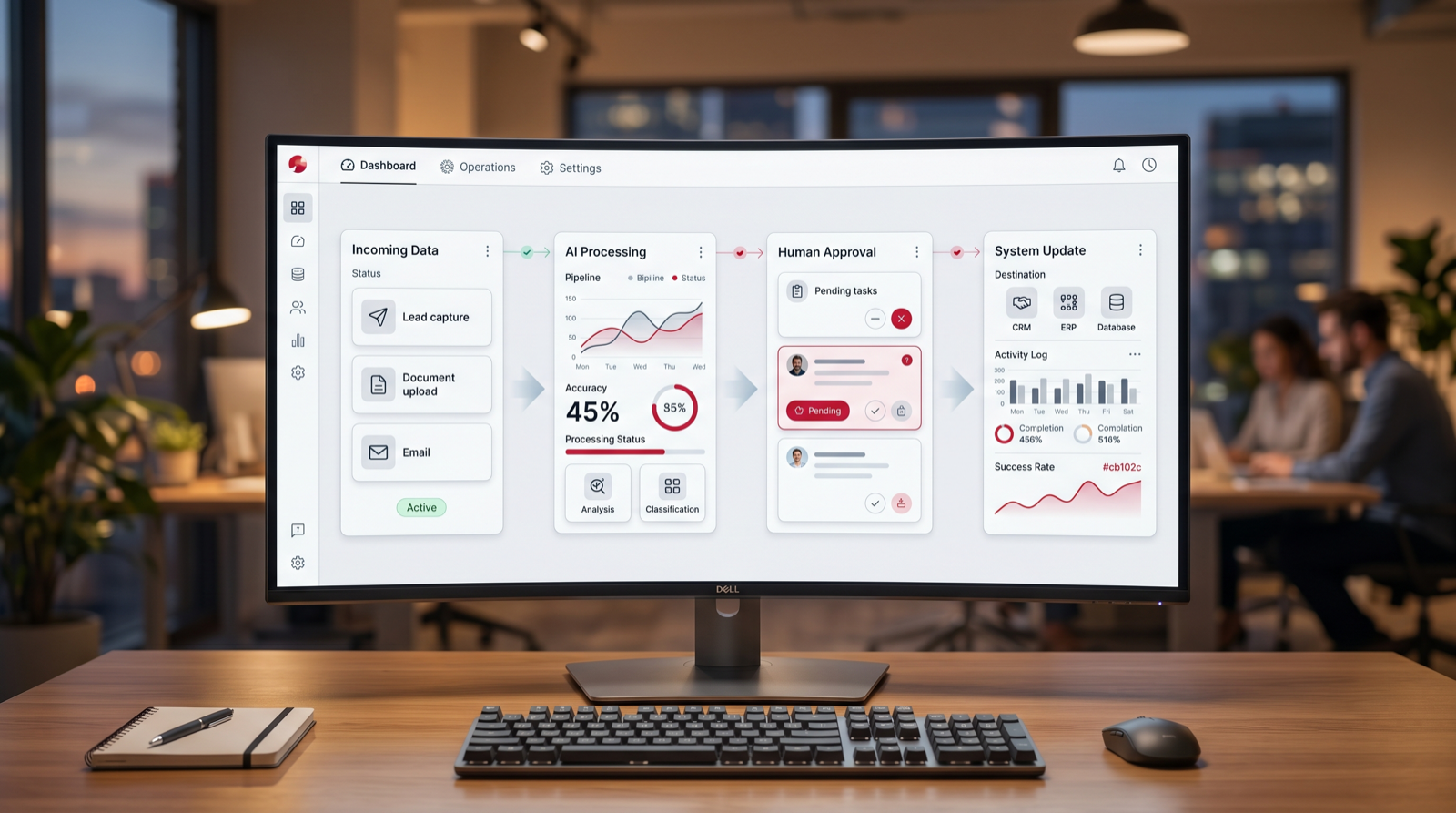
Tool-first automation is fragile. A team can buy a new AI platform, connect a few apps, and still fail because nobody defined the real process. Before choosing tools, the agency should create a map of the current workflow and the desired workflow. That map should show triggers, inputs, systems, handoffs, decisions, exceptions, approvals, outputs, and success metrics. It should also show which parts are simple automation, which parts require AI, and which parts should stay human-controlled.
This is where an AI automation agency creates clarity. For example, "automate sales" is too broad. A better process map might say: classify inbound leads, enrich company data, draft the first reply, notify the correct salesperson, create a CRM task, and log the next action. "Automate finance" is too broad. A better process map might say: extract invoice fields, compare them to purchase orders, flag mismatches, route exceptions to a reviewer, and update the finance tracker.
The map does not need to be complicated, but it needs to be concrete. It should be understandable by the people who do the work, not just by developers. If your team cannot review the map and say "yes, that is how it works," the agency is guessing.
4. Use a Scorecard to Compare AI Automation Agencies
A guide is useful because it turns a vague buying decision into a visible checklist. When you compare AI automation agencies, use a scorecard instead of relying only on sales calls. Give each agency a simple rating for workflow discovery, integration capability, AI agent development, data privacy, human review design, documentation, training, post-launch support, and ability to measure results. You do not need a complex procurement system. You just need a consistent way to compare what each agency can actually deliver.
Must-have capabilities
- Workflow discovery before tool selection.
- Ability to build integrations, not only prompts.
- Clear data privacy and access control process.
- AI agent development with human review paths.
- Post-launch support, measurement, and iteration.
Warning signs
- They promise full automation before seeing your workflow.
- They cannot explain failure handling.
- They only recommend one platform for every problem.
- They do not define success metrics before the build.
- They avoid documentation and training.
The strongest agencies are comfortable being evaluated this way. They can explain what they do well, where they need more information, and why some use cases should not be automated yet. The weaker agencies usually lean on vague words such as "revolutionary," "fully autonomous," or "next generation" without showing how the system will behave in your company.
You can also ask each agency to describe the first two weeks of work. This is a simple test. A practical answer will include discovery, access review, sample data, workflow mapping, success metrics, and a decision about pilot scope. A vague answer will jump directly to building or ask you to buy a platform before the workflow is understood. The first two weeks reveal the agency's operating model better than a polished proposal deck.
5. Choose a First Use Case With Clear Rules and Visible Value
The best first AI automation project is usually not the most exciting idea in the room. It is the process with enough volume, clear rules, visible cost, and measurable outcomes. Good starting points include inbound lead qualification, quote follow-up, customer support triage, invoice review, reporting preparation, candidate screening, order status updates, meeting notes, knowledge base search, and CRM cleanup. These workflows are valuable because they happen repeatedly and create measurable friction.
The agency should help you avoid two traps. The first trap is choosing a use case that is too small to matter. If the automation saves five minutes a month, nobody will care. The second trap is choosing a use case that is too broad for a first pilot. If the project touches every department, every system, and every approval chain, the first launch will slow down. The sweet spot is a narrow workflow that still creates a real business result.
A good AI automation agency will score use cases by impact, feasibility, risk, data quality, integration needs, and time to launch. That scoring process protects your budget. It helps the team choose the first pilot based on business logic rather than enthusiasm.
6. Expect a Focused Pilot, Not a Giant First Build
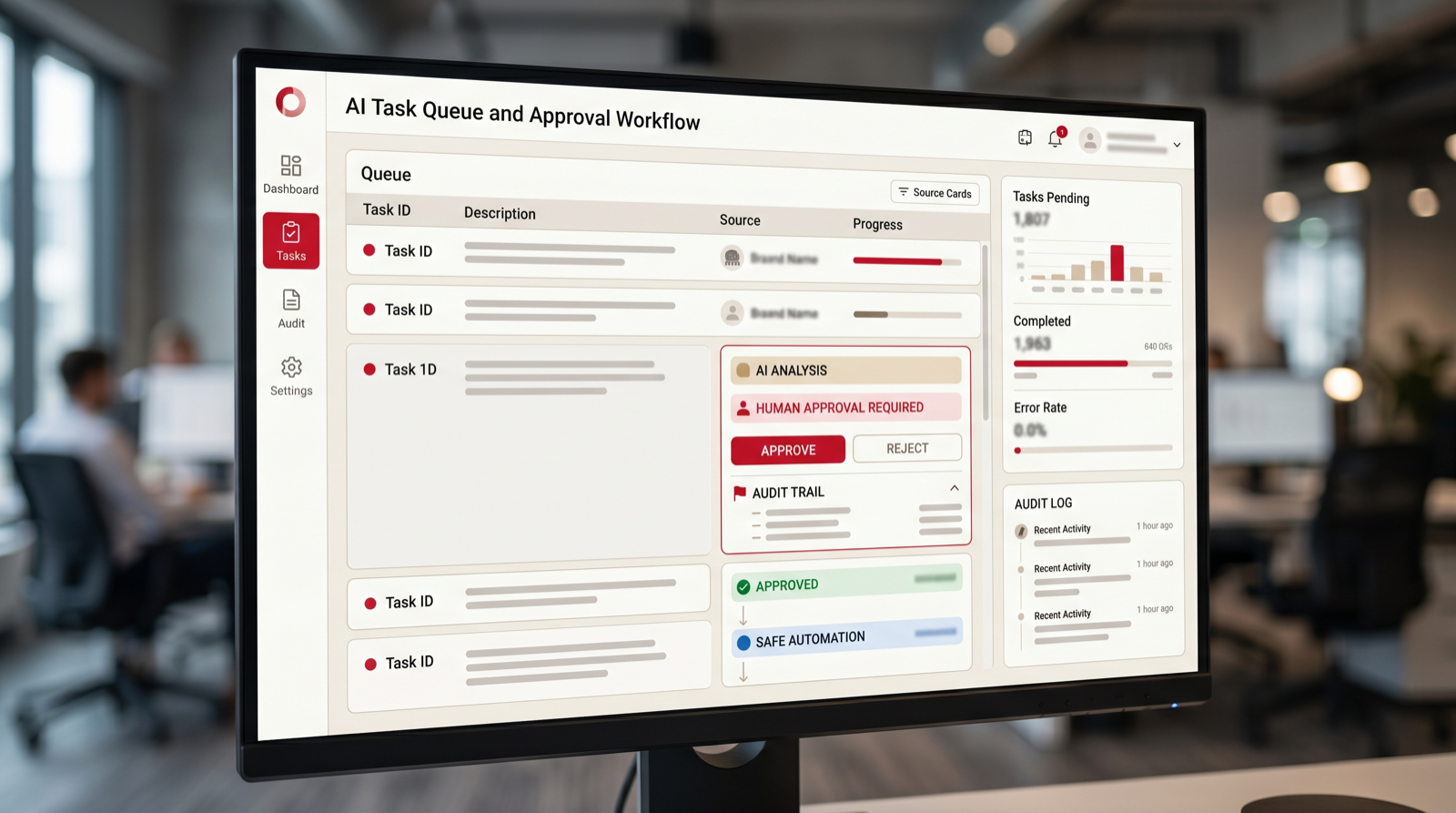
A practical first pilot should be narrow enough to launch in weeks, not quarters. In the first week, the agency should map the workflow, collect real examples, define success metrics, and clarify the approval path. In the second week, it should build the first automation path and connect the necessary tools. In the third week, it should test against real cases, tune rules or prompts, and capture edge cases. In the fourth week, it should launch with a small group, measure results, and decide what should expand.
This does not mean every pilot will take exactly 30 days. Some can start faster. Some need more time because of data access, integrations, security review, or business complexity. The point is that the first project should be structured to learn. A pilot is not only a technical build. It is a controlled way to prove whether the automation improves speed, quality, visibility, or capacity.
Ask the agency what will be true at the end of the pilot. Will you have a working workflow? A tested AI agent? A dashboard? A documented process? A measurement report? A plan for phase two? If the answer is unclear, the pilot scope is not ready.
Pilot planning
Turn one manual process into a measurable AI pilot.
Bring us the workflow that slows your team down. We will map it, scope the automation path, and define what success should look like before anything is built.
Talk to Go Expandia7. Check Their Plan for AI Agents and Human Guardrails
AI agent development is one of the biggest reasons companies search for an AI automation agency near me. A task-focused AI agent can read information, reason over context, use tools, draft outputs, route work, and complete defined steps. That can be powerful, but it should not be treated as magic. The agency needs to design clear boundaries around what the agent can do, which data it can access, which tools it can use, and when a person must approve the action.
Human guardrails are especially important for sales, support, finance, legal, HR, healthcare, insurance, and any workflow where mistakes carry cost or reputational risk. A good AI agent might draft a reply, classify a ticket, prepare a report, or recommend an action, while a person approves anything sensitive. Over time, the system can become more efficient as confidence improves, but the first version should make risk visible.
Ask how the agency handles logs, permissions, audit trails, fallback paths, and uncertainty. What happens when the AI does not know? Does it guess, escalate, ask for missing information, or route the task to a reviewer? The answer tells you whether the agency builds business systems or only experiments.
8. Confirm They Can Build Integrations, Not Only Prompts
Many agencies can write prompts. Fewer can build reliable automation across business systems. For most companies, the value comes from connecting AI to the tools already used by the team: CRM, help desk, email, spreadsheets, document storage, analytics, project management, ERP, booking tools, payment systems, and internal databases. If the agency cannot handle integrations, the AI will stay isolated from the real workflow.
Integrations do not always need to be complex. Sometimes the first version can use a controlled form, a shared inbox, a spreadsheet, or a lightweight automation tool. Other times the project needs APIs, authentication, permissions, database logic, custom interfaces, or internal dashboards. The right agency should be able to choose the simplest reliable path for the use case.
This is also where custom AI solutions for businesses become important. Off-the-shelf tools are useful, but they may not match your exact approval chain, reporting needs, or customer process. A serious agency should know when to use existing software and when to build a tailored layer around your business.
Do not worry if your software stack is messy. Most real businesses have messy systems: old CRMs, shared spreadsheets, email threads, manual exports, duplicate records, PDF attachments, and team-specific workarounds. A capable AI automation agency should not be surprised by that. It should help you decide whether the pilot can work with the current setup or whether a small cleanup step is needed first. The goal is not to create a perfect technology stack before automation starts. The goal is to build a reliable path through the reality you already have.
9. Ask About Data Privacy, Permissions, and Compliance Early
Data access should never be an afterthought. AI automation often touches customer messages, sales notes, invoices, contracts, support tickets, internal documents, or operational records. Before anything is built, the agency should ask what data is sensitive, who can access it, where it is stored, what systems are approved, and what the company cannot share with third-party tools.
For European teams, this usually includes GDPR considerations, data processing agreements, retention rules, and questions about where information is processed. For teams in regulated industries, it may include stricter review around personal data, financial data, health information, legal documents, or confidential customer records. Even when the workflow is simple, the agency should design permissions carefully.
The practical question is simple: can the agency explain the data path? If a support ticket enters the system, where does it go? Which model or tool reads it? What gets stored? Who can see the output? Can sensitive information be removed, masked, or restricted? If the agency cannot answer clearly, slow down before giving access.
10. Look for the Full Service Mix Behind the AI Automation Agency Label
The phrase "AI automation agency" should include more than one service. A strong partner can help you decide what to build, build the automation, create AI agents where they make sense, design custom AI systems when off-the-shelf tools are not enough, train your team, and support the system after launch. That service mix matters because AI projects often move through several stages. You may start with consulting, then build a pilot, then add integrations, then create a custom dashboard, then expand to another team.
Go Expandia positions AI automation as the main delivery path, supported by AI consulting services, AI agent development, and custom AI solutions for businesses. That structure is practical because most companies do not need a single isolated feature. They need advice, implementation, adoption support, and ongoing improvement.
AI Automation Agency
Workflow automation, integrations, reporting, operational handoffs, and measurable time savings.
AI Consulting Services
Use case selection, roadmap design, governance, budget planning, and implementation strategy.
AI Agent Development
Task agents, copilots, support assistants, research agents, and controlled tool-using systems.
Custom AI Solutions for Businesses
Tailored AI systems, dashboards, data workflows, internal apps, and company-specific interfaces.
11. Require Documentation, Training, and Ownership From Day One
An AI automation project is not finished when the first workflow runs. Your team needs to understand how to use it, what it does, what it does not do, how exceptions are handled, who owns changes, and how performance will be reviewed. If the agency avoids documentation, the system becomes dependent on one external person. That is risky for a production business.
Documentation should include the workflow map, connected systems, data sources, prompts or rules where appropriate, approval paths, known limitations, test cases, escalation steps, and a change log. Training should be designed for the people who actually use the automation, not only for management. A sales team needs to know what the lead automation will do. A support team needs to know when AI drafts are safe to use. A finance team needs to know how invoice exceptions are flagged.
Good documentation also makes future expansion easier. When the first pilot works, you can use the same operating pattern for the next process instead of starting from zero.
Ownership should be discussed early as well. Who can request changes? Who approves new automations? Who monitors performance? Who receives alerts when something fails? Who decides whether the AI agent is allowed to take a new action? These questions may sound administrative, but they protect the project after launch. AI automation touches operations, and operations need clear responsibility. A good agency will help define that responsibility instead of leaving the system as a black box.
12. Measure ROI in Operating Metrics, Not AI Excitement
The right budget depends on complexity, data access, integrations, security needs, and the number of teams using the automation. A simple workflow pilot can be scoped in weeks. A deeper custom AI solution with multiple departments, permissions, analytics, and integrations needs a larger plan. The important point is that the agency should tie cost to measurable operational value.
Do not evaluate AI automation only by software subscription cost. The real comparison is manual hours saved, response time improved, errors reduced, conversion increased, reporting accelerated, and team capacity recovered. If a support workflow saves 40 hours a month, if a sales workflow improves follow-up speed, or if a finance workflow catches errors before payment, the automation has a business case that can be measured.
Ask the agency how it reports ROI. Will it track cycle time, volume handled, human review rate, error rate, adoption, customer response time, or revenue impact? Different workflows need different metrics, but every serious project should define measurement before launch. If nobody knows what success looks like, the project becomes a technology experiment instead of a business improvement.

13. Ask Direct Questions Before You Hire
Before hiring an AI automation agency near you, ask direct operational questions. What workflows have you automated before? How do you handle sensitive data? What happens when the AI is unsure? Which actions require human approval? How will we measure time saved? Who owns the system after launch? How do you document prompts, integrations, and permissions? How quickly can we change the automation if the process changes?
You should also ask what the agency will not automate. This is important. Mature AI partners know that some decisions need human accountability, some data is not ready, and some workflows should be redesigned before AI is added. The best answer is not always "yes." The best answer is often "we can automate this part safely, but this decision should stay with a person until the data is more reliable."
A short hiring checklist
- Ask for a sample discovery process, not only a portfolio.
- Ask how the agency scores automation opportunities.
- Ask what data access is required for the pilot.
- Ask how users will be trained and supported.
- Ask how the agency handles errors, exceptions, and change requests.
The goal is not to make the sales call difficult. The goal is to see whether the agency thinks like an operator. AI automation affects how work gets done. You need a partner that is comfortable discussing messy processes, old systems, edge cases, approvals, and adoption.
14. Make Sure Support Continues After Launch
AI automation needs post-launch support because real users will always find cases that were not obvious during discovery. A customer may phrase a request differently. A supplier invoice may use a new layout. A sales lead may arrive without a required field. A manager may change the approval rule. A system API may change. The agency should expect this and build support into the delivery model.
Support does not mean endless emergency work. It means there is a clear process for monitoring, improving, and maintaining the automation. That may include weekly review during the pilot, monthly optimization after launch, documentation updates, prompt or rule changes, integration fixes, user feedback sessions, and reporting on adoption. Without support, even a good first build can slowly become unreliable.
This is another reason to choose an agency with a practical local operating model. When your team finds an issue, you need a response rhythm that matches business reality. Waiting too long creates distrust, and once users stop trusting an automation, adoption becomes much harder to recover.
15. Choose a Partner That Can Expand Across Teams Without Breaking the Model
A successful first pilot should create a foundation for expansion. Once one workflow is mapped, automated, measured, and supported, the same operating model can be applied to other teams. Sales may start with lead qualification, then move to proposal support. Support may start with ticket triage, then move to knowledge base answers. Finance may start with invoice checks, then move to reporting. Operations may start with status updates, then move to planning workflows.
Expansion should still be controlled. The agency should not turn every process into AI automation just because the first pilot worked. Each new use case needs its own discovery, risk review, data check, and success metric. The benefit of a strong partner is that the process becomes faster without becoming careless.
The best AI automation agency near you will think in phases. Phase one proves value. Phase two strengthens adoption. Phase three expands to adjacent workflows. Phase four creates a repeatable operating system for automation. That is how AI becomes part of the business instead of a disconnected experiment.
Final Checklist: What the Right AI Automation Agency Should Bring
By the time you finish evaluating partners, you should be able to see a clear difference between a vendor that sells AI features and an agency that can improve business operations. The right agency should understand your workflow, define a practical first pilot, connect the tools that matter, protect sensitive data, design human guardrails, document the system, train users, measure ROI, and support improvement after launch.
It should also be honest about what should not be automated yet. Some processes need better data first. Some decisions need human accountability. Some workflows need simplification before AI is added. That honesty is not a weakness. It is a sign that the agency is thinking about outcomes rather than selling automation for its own sake.
If you are searching for an AI automation agency near me, use this list as your filter. Look for practical access, workflow expertise, implementation ability, agent development skills, custom AI solution capability, and a support model that keeps the system useful after launch. The best partner is the one that helps your team work better, not the one that uses the most impressive AI language.
The final decision should feel concrete. You should know the first workflow, the reason it was selected, the expected launch path, the systems involved, the risks, the approval points, the success metrics, and the support process. You should also know what will not be automated in the first phase. That clarity is what turns an AI conversation into a business project.
If two agencies look similar, choose the one that asks better questions. Better questions usually lead to better automation. They show that the agency is thinking about your team, your data, your customers, and your constraints. In AI automation, that matters more than a long list of tools. Tools change quickly, but disciplined workflow thinking remains useful across every project.
A final useful test is to ask the agency to explain the project back to you in one paragraph. The answer should mention the workflow, the business reason, the first automation path, the people involved, the tools connected, the approval logic, and the result you want to measure. If the summary is clear, the project is probably ready to scope. If the summary is vague, the discovery work is not finished yet. That simple test can prevent weeks of confusion.
Keep that paragraph after the call. It becomes the reference point for the proposal, the pilot plan, and the first review meeting. If later documents drift away from that agreed summary, you can bring the conversation back to the workflow and outcome that mattered in the first place.
Free checklist
Get the AI automation agency checklist by email.
Put your work email below and we will send the checklist plus a practical first-pass review path for choosing the right automation pilot.
Author
About Bailey Roque
Bailey Roque writes for Go Expandia on AI automation, workflow design, AI agents, and practical AI adoption for business teams.
The focus is on use-case selection, human review paths, data boundaries, rollout planning, and turning AI pilots into supported operating workflows.
About Go ExpandiaFAQ: AI Automation Agency Near Me
What is an AI automation agency?
An AI automation agency designs and builds systems that use AI, integrations, and workflow logic to reduce repetitive manual work. It may build AI agents, connect business tools, automate reporting, process documents, and support teams after launch.
Do I need an AI automation agency physically near me?
Not always. What matters most is timezone overlap, workflow understanding, strong communication, and accountability. A remote agency can work like a local partner if it runs structured workshops, documents decisions, and supports implementation properly.
How quickly can an AI automation project start?
Discovery can usually start within days. A focused AI automation pilot often launches in 2 to 6 weeks, depending on workflow complexity, data access, integrations, approvals, and testing requirements.
What should I automate first?
Start with a repeatable workflow that has clear rules, high volume, visible cost, and measurable outcomes. Good first projects include lead qualification, support triage, invoice checks, reporting, document processing, and CRM cleanup.
Can Go Expandia build custom AI agents?
Yes. Go Expandia builds task-focused AI agents, copilots, and custom AI systems for business workflows. We combine consulting, automation, agent development, integrations, training, and ongoing support.
Looking for an AI Automation Agency Near You?
Go Expandia helps companies automate workflows, build AI agents, and launch custom AI solutions with a practical agency model built around business outcomes.